

A certificate of service is a confirmation of a former employee’s service to that employer. It contains basic details of the service. Section 51 of the Employment Act, makes it mandatory for employers to issue a certificate of service to an employee upon termination of his employment, unless the employment has continued for a period of less than four consecutive weeks.
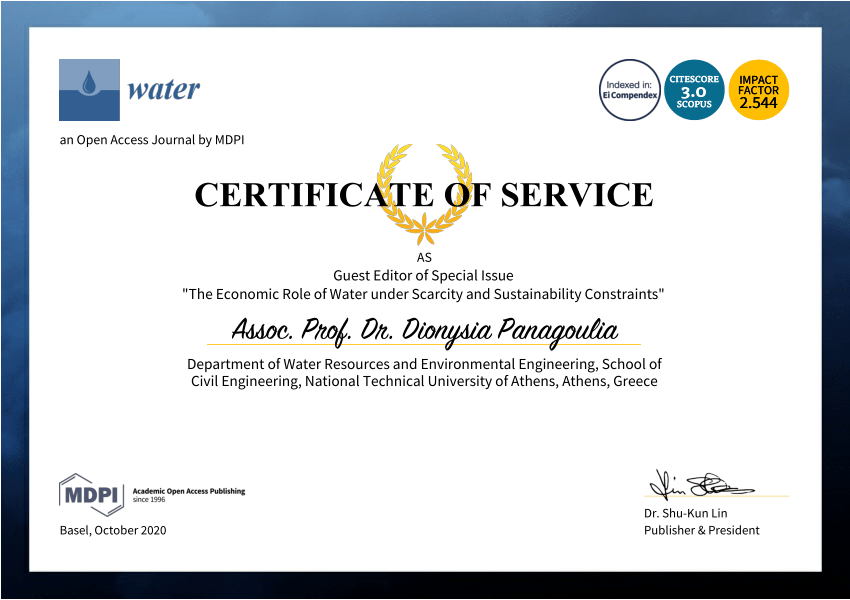 The certificate of service shall contain the name of the employer and his postal address; the name of the employee; the date when employment of the employee commenced; the nature and usual place of employment of the employee; the date when the employment of the employee ceased; and such other particulars as may be prescribed. The certificate is not to be confused with a recommendation letter. The certificate covers skeletal information to enable one proves the employment but a recommendation letter would give accolades and upholds the exiting employee. Section 51 of the Employment Act clarifies that no employer is bound to give to an employee a testimonial, reference or certificate relating to the character or performance of that employee, otherwise known as recommendation.
Failure to issue the certificate or falsifying the contents attracts criminal penalties under section 51 (4) of the Employment Act, on conviction, a fine not exceeding one hundred thousand Shillings or to imprisonment for a term not exceeding six months or to both. However, the Employment and Labour Relations Court has been hesitant in implementing the criminal sanctions, perhaps because of the nature of the court as quasi-criminal. In the case of Moses Ngumo v East African Breweries Limited [2019] eKLR (accessible from http://kenyalaw.org/caselaw/cases/view/177962/), Justice Ongaya acknowledged the illegality in failing to issue a certificate of service but declined to sentense the employer, that there would be no finding of criminal liability and imposition of a fine as prayed for because the present case was obviously not a criminal proceeding whose rules and standards of proof are higher. In the case of Angela Wokabi Muoki v Tribe Hotel Limited [2016] eKLR, (accessible from http://kenyalaw.org/caselaw/cases/view/135834), for non-issuance of a certificate of service, Justice Mbaru converted the criminal sanction of a fine and/or imprisonment to payment of Kshs.100, 000.00 to the claimant. There are many other instances where the duty to issue the certificate of service was underscored. Employment officers and such other authorized officers have powers to prosecute for noncompliance with employment and labour laws. It follows that if a strict prosecution is pursued by the authorized offices and if judges were to exercise their judicial muscle fully, this clause and criminal sanctions could be implemented fully against employers.
In conclusion, it remains a legal obligation and a good practice to issue the certificate because the declaration of an unfair labour practice has negative bearing on a company’s reputation. The certificate of service remains a critical component of exit processes and mitigates risks for employers




Mercy Kareithi & Company Advocates was
founded on 23 March 2006 by Mercy
Wanjiku Kareithi. The company serves
clients in many practice areas such as
children and law, constitutional law,
employment & law labour, legislative
drafting, probate & administration
(succession), family law, corporate strategy,
immigration, international human rights law,
conveyancing and real estate, debt
recovery, litigation, intellectual property,
legal audits & compliance, amongst others.